
By Aaliya Fatima
As Hajj is the most rewarding and sacred worship for Muslims, everyone wants to ensure they make the most of this incredible opportunity. Everyone tries to indulge in numerous acts of worship and make dua when on pilgrimage. This makes every first-time pilgrim curious about what they should recite during Hajj. Indeed, there are many supplications that the pilgrims can recite to get closer to the Creator, ask for His forgiveness, and endless blessings.
We Muslims know about the obligation and significance of Hajj. Also, Muslims believe that whoever gets a chance to visit the pilgrimage sites is invited by Allah Almighty Himself, meaning that they are His guests. No one wants to miss an opportunity like this to get closer to the Almighty and indulge in supplications. Dua is one of the most powerful tools of the Muslims, and calling upon Him during Hajj is the ultimate way of getting your sins forgiven and asking the Almighty for whatever your heart desires.
Every year, numerous UK citizens go on the Hajj. If you also intend to undertake this blessed journey, you can explore Hajj 2025 deals, and also learn the Prophetic duas and prayers for Hajj in this article.
Significance of Making Dua During Hajj
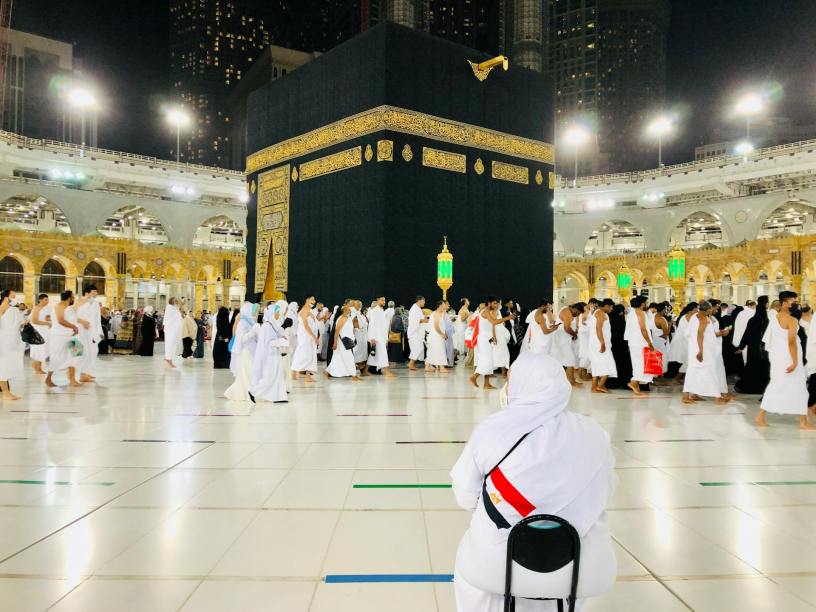
What can be better than getting a chance to pray and pour your heart out while standing in front of the House of the Almighty? This emotional experience makes everyone feel much closer to the Creator and motivates them to bring their life back on the right path.
The following hadith explains the significance of making dua during Hajj – when you get to be the guest of Allah:
“The pilgrims performing Hajj and ‘Umrah are a delegation to Allah. If they call upon Him, He will answer them; and if they ask for His forgiveness, He will forgive them.” (Ibn Majah 2,892 – Hasan)
Some Duas to Recite During Hajj
The only supplications that you must recite during Hajj are the takbir and talbiya. Apart from these, you are free to recite the duas of your choice. However, it is highly desirable to recite the supplications taught by the Prophet ﷺ, which we discuss here, starting with the takbir and talbiya.
Takbir
اَللّٰهُ أَكْبَرُ
“Allah is the Greatest.” (Muslims 1,342)
Talbiya
لَبَّيْكَ اَللّٰهُمَّ لَبَّيْكَ، لَبَّيْكَ لَا شَرِيْكَ لَكَ لَبَّيْكَ، إِنَّ الْحَمْدَ، وَالنِّعْمَةَ، لَكَ وَالْمُلْكَ، لَا شَرِيْكَ لَكَ
“Here I am, O Allah, here I am. Here I am, You have no partner, here I am. Verily, all praise and blessings are Yours, and all sovereignty. You have no partner.” (Ibn Majah 2,919 – Sahih)
Dua for Travelling
Once you embark on any journey, including for the Hajj, you can begin with this beautiful dua for traveling from the Quran:
سُبْحَانَ الَّذِي سَخَّرَ لَنَا هَذَا وَمَا كُنَّا لَهُ مُقْرِنِينَ وَإِنَّا إِلَى رَبِّنَا لَمُنْقَلِبُونَ
“Exalted is He who has subjected this to us, and we could not have [otherwise] subdued it. And indeed we, to our Lord, will [surely] return.” (Al-Zukhruf 43:13-14 – recommended to be recited in Muslims 1,342)
Dua for Tawaf
The Prophet ﷺ has not provided any specific supplication for reciting while performing the tawaf – circling the Kaabah as a means of devotion to Allah. However, he recited the following dua while he walked between the Yemeni Corner and the Black Stone during tawaf:
رَبَّنَا آتِنَا فِي الدُّنْيَا حَسَنَةً وَفِي الْآخِرَةِ حَسَنَةً وَقِنَا عَذَابَ النَّارِ
“Our Lord! We desire the good in this world and in the hereafter, so grant it to us and protect us from the tormenting hellfire.” (Ibn Hibban 3,826)
Duas to Recite at Safah and Marwah
Sa’i, a compulsory part of the pilgrimage, requires walking between the sacred hills of Safa and Marwah. Whenever the Prophet ﷺ reached the top of Safa or Marwa, he recited takbir (Allahu Akbar) thrice, and then recited tahlil (given as follows) alongside making general supplications:
لَا إِلٰهَ إِلَّا اللَّهُ وَحْدَهُ لَا شَرِيكَ لَهُ، لَهُ الْمُلْكُ وَلَهُ الْحَمْدُ وَهُوَ عَلَىٰ كُلِّ شَيْءٍ قَدِيرٌ
“There is none worthy of worship except Allah alone with no partner or associate, His is the dominion and to Him be praise, and He has power over all things.” (Nasai 2,972 – Sahih)
Dua for Arafah
The Day of Arafah (or Arafat) is one of the most blessed days of the pilgrimage. It is a holy day for the Hajj pilgrims and Muslims worldwide. No matter where you are, you can spend your day in supplications to gain exceptional rewards and blessings. The Prophet ﷺ, in addition to making personal supplications, indicated the importance of reciting the recited tahlil (as given above) on the Day of Arafah. He said:
“The best of supplication is the supplication of the Day of `Arafah. And the best of what I and the Prophets before me have said is:
لَا إِلٰهَ إِلَّا اللَّهُ وَحْدَهُ لَا شَرِيكَ لَهُ، لَهُ الْمُلْكُ وَلَهُ الْحَمْدُ وَهُوَ عَلَىٰ كُلِّ شَيْءٍ قَدِيرٌ
“There is none worthy of worship except Allah alone with no partner or associate, His is the dominion and to Him be praise, and He has power over all things.” (Tirmidhi 3,585 – Hasan according to Al-Albani)
Dua When Slaughtering an Animal
The last ritual of Hajj is slaughtering an animal. This is done to remember the great sacrifice of Prophet Ibrahim (AS). While the Prophet ﷺ recited various supplications at the time of slaughtering an animal on different occasions, it is sufficient to simply say Bismillah and Allahu Akbar before making the sacrifice, as was done by the Prophet ﷺ. (Bukhari 5,565)
Summing Up
Now that you know what every pilgrim should recite during Hajj, you can get familiar with these supplications and learn them. In addition, the Hajj packages often include guidance on the best practices and prayers to make your pilgrimage even more meaningful.
Most importantly, you must also recite your personal supplications to make sure that you put forward the desire of your heart in front of the Almighty. Lastly, you must keep reciting istighfar and supplications for your forgiveness, as this is the golden opportunity to start your life anew and strive for self-improvement!
 Islam Explained