
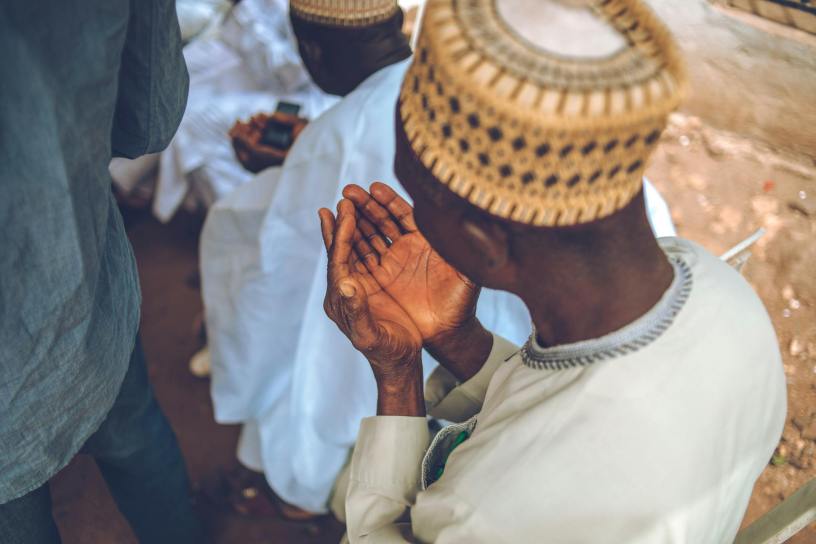
We can call upon Allah at any time and under any circumstance. However, there are certain occasions that are considered especially significant with regard to the acceptance of prayers. In addition to praying at the most preferred times, it is important to make dua in the best manner and with great attentiveness.
This article discusses the specific days, situations, and moments in which it is highly recommended to supplicate to Allah and seek His forgiveness due to the blessing associated with them. The best times to make dua, according to the Hadith, are as follows.
1) Fridays
In Islam, Friday is considered the most virtuous day of the week. It is recommended to offer plenty of dua on this day since it contains an hour that is especially blessed with regard to acceptance of prayers, as the Prophet ﷺ informed us:
“There is an hour (or a moment) of particular significance on Friday. If it happens that a Muslim is offering a salah and invoking Allah for some good at that very moment, Allah will grant him his request.” (Bukhari 5,294)
2) Mondays and 3) Thursdays
Two other days of the week, Monday and Thursday, also have religious significance. The Prophet ﷺ not only used to fast frequently on these two days but also declared their significance in the following words:
“The gates of Paradise are opened on Mondays and Thursdays, and every slave (of Allah) who does not associate anything with Allah is forgiven, except a man between whom and his brother there is some grudge. It is said, ‘Wait for these two until they reconcile…’” (Muslim 2,565a)
4) Day of Arafah
Making dua on the 9th of Dhu’l-Hijjah is highly meritorious, not just for those gathered at Arafah, but also for the non-pilgrims. The Prophet ﷺ fervently supplicated to Allah with his hands raised on this day, as narrated by Usama Ibn Zayd:
“I was a companion rider with the Prophet ﷺ at Arafah. He raised his hands in supplication, so his she-camel began leaning and he dropped her halter, so he took the halter with one of his hands while he was raising the other hand.” (Nasai 3,011 – Hasan)
5) Laylat Al-Qadr
Laylat Al-Qadr, translated as the Night of Decree or the Night of Power, is one of the odd nights among the last ten nights of Ramadan. Its immense significance is conveyed by the fact that the Prophet ﷺ taught us the following prayer specifically for this night:
“O Allah, indeed You are Pardoning, You love [to] pardon, so pardon me.” (Tirmidhi 3,513 – Sahih)
6) Last One-Third of the Night
Waking up during the last part of the night requires the highest degree of commitment and self-discipline. However, the reward is proportional to the effort required as Allah draws close to us during this period and listens to our pleas in order to grant whatever it is we desire – including forgiveness from Him. The Prophet ﷺ informed us:
“Our Lord, the Blessed, the Superior, comes down every night on the nearest heaven to us during the last third of the night, and He says, ‘Who invokes Me so that I may respond to his invocation? Who asks Me so that I may grant him his request? Who seeks My Forgiveness so that I may forgive him?’” (Bukhari 1,145)
7) Between Adhan and Iqamah
It is also a desirable practice to supplicate right after the adhan or before the start of the obligatory prayer (between the adhan and the iqamah) as the Prophet ﷺ said:
“The supplication made between the adhan and iqamah is not rejected.” (Tirmidhi 212 – Sahih)
8) During Salah
The designated time for making supplication during salah is at the end, both before and after taslim. However, it is also desirable to supplicate in other postures, such as when making qiyam (standing) during nafl (voluntary) prayers. Auf Ibn Malik narrates:
“I stood with the Messenger of Allah ﷺ (in prayer one night). He started reciting Surah Al-Baqarah. He would not recite a verse of mercy except that he would pause at it and ask (for mercy), nor would he recite a verse of punishment except that he would pause and seek refuge (with Allah)…” (Abu Dawud 873 – Sahih)
It is also preferable to call upon Allah while prostrating, as the Prophet ﷺ declared:
“The closest that a person is to his Lord is when he is prostrating, so say a great deal of supplication.” (Muslim 482)
9) Just Before Breaking the Fast
Another opportune time for making dua is right before breaking the fast when nearing sunset, as revealed by the following hadith:
“There are three whose supplication is not rejected: the fasting person when he breaks his fast, the just leader, and the supplication of the oppressed person…” (Tirmidhi 3,598 – Hasan)
10) While Oppressed
The person who is oppressed, or otherwise wronged, has a special status in the sight of Allah which makes their supplications more likely to be accepted, as evidenced by the above hadith.
11) When it Rains
The Prophet ﷺ said:
“Two (supplications) are not rejected, or are seldom rejected: prayer at the time of the call to prayer (adhan), and at the time of fighting, when the people grapple with each other.” Another version of the hadith adds: “And while it is raining.” (Abu Dawud 2,540 – Sahih)
12) When Fighting for the Cause of Allah
As the above hadith indicates, striving with weaponry for the cause of truth and justice, especially for defending Islam and the Muslims, is another preferred time to supplicate to Allah.
13) While Travelling
Praying to Allah while travelling or journeying has special significance, as the Prophet ﷺ said:
“Three supplications are responded to: the supplication of the oppressed, the supplication of the traveller, and the supplication of the parent for their child.” (Tirmidhi 3,448 – Hasan)
This article is an adaption from an excerpt of the book His Mercy is Vast: A Practical Guide to Seeking Allah’s Forgiveness available for purchase globally.


the Hadith I shared with you is authentic ( you can look it up) and it’s proof that hoor al ayn are a separate creation from the women of this world.
LikeLike
The Hadith about the hoor al ayn I shared with you is authentic ( you can look it up) and it implies that hoor al ayn are separate from the women of this world.
LikeLike
Each man will have two wives from among al-hoor al-‘iyn, the marrow of whose calves can be seen from beneath the bone and flesh.” (Narrated by al-Bukhaari, no. 3014; Muslim, 2843.
LikeLike
I know this is a little late, but your Hoor al ayn interpretation isn’t correct. There are authentic Hadiths and other narrations which prove that hoor are a separate creation of women in Jannah: Mu‘ādh ibn Jabal (may Allah be pleased with him)reported that the Prophet (may Allah’s peace and blessings be upon him) said: “Whenever a woman harms her husband in this world, his wife from the Houris of Paradise says: ‘Do not harm him! May Allah destroy you! He is but a passing guest with you, and he will soon leave you to join us.'”
[Authentic hadith] – [Narrated by Ibn Majah – Narrated by At-Termedhy – Narrated by Ahmad]
There are other narrations that majority of scholars use and that is that the believing women of this world will be much more better and beautiful than the Hoor al ayn due to their test in this life. The view that you gave just tells us that the women will be virgins but it doesn’t tell us that they will transform into “Hoor al ayn” otherwise the Hadiths would’ve clarified that the women of earth are specifically the hoor al ayn.
LikeLike