
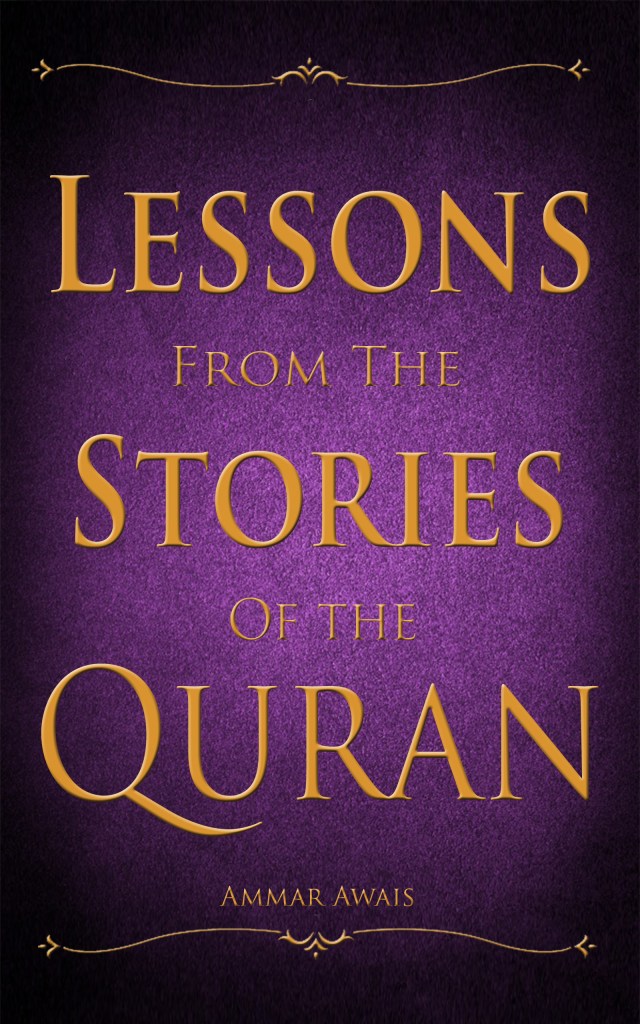
The book Lessons from the Stories of the Quran presents seventy valuable insights from the stories narrated in the Quran – from the creation of the first humans to the time of the Quran’s revelation. It analyses all major narratives of the Quran, including those of the prophets Nuh (Noah), Ibrahim (Abraham), Yusuf (Joseph), Musa (Moses), Sulayman (Solomon), as well as Maryam (Mary) and Dhul-Qarnayn. Each chapter provides a brief overview of the narrative, and summarizes how we can implement its important lessons today. Thought-provoking, yet concise, this book will be richly appreciated by those who want to benefit from the Quran in a practical sense.
Book Sample
The following are 3 among the 70 lessons presented in this book, along with brief accounts of the stories from which these lessons have been derived.
Lesson 1: Human intellect is a great blessing
Why did Allah command the angels to prostrate to Adam (AS)? What made Adam (AS) superior to such a noble creation as the angels? It was his superior intellect: the higher faculties of thinking, perceiving, learning, and memorizing. That is why when the angels remarked that the human would cause bloodshed and corruption on earth, Allah commanded Adam (AS) to replicate to the angels all the names Allah had taught him, thus proving to the angels his superior intellect. We should, therefore, engage our minds for the purpose of gaining knowledge, researching, reflecting on the universe, and making scientific advancements. Allah repeatedly commands us in the Quran to use our cognitive abilities, frequently asking the rhetorical question, “Then will you not use reason?” (37:138)
Lesson 29: Express confidence in your abilities
We should have confidence in our abilities and skills, and not be afraid of accepting responsibility. There is nothing wrong with informing others of our capabilities, and requesting a position of authority on its basis. However, it is important to be honest in appraising ourselves, and not exaggerate or show off. When the King of Egypt decided to appoint Yusuf (AS) for his service, the latter declared, “Appoint me over the storehouses of the land. Indeed, I will be a knowing guardian.” (12:55) Yusuf (AS) felt he could do the job well, and he made it known to the king.
Lesson 45: Eloquent speech is a gift from Allah
The ability to speak fluently, and express oneself articulately, is a gift from Allah. The prophets were under obligation to communicate His word to the people, so they had to be good speakers to fulfil this task. Dawud (AS), in particular, spoke very eloquently, as Allah says, “We strengthened his kingdom, and We gave him wisdom and a decisive way of speaking.” (38:20) Speaking with confidence and precision is a natural trait of true leaders. It inspires trust and respect among the followers.
Get Access to the Book
Download Free PDF
You can download a free PDF version of Lessons from the Stories of the Quran here.
Buy Paperback
You can purchase the paperback version of Lessons from the Stories of the Quran from Amazon, which offers international shipping for most countries. The links are shared below.
Australia | Canada | France | Germany | Italy | Japan | Mexico | Netherlands | Poland | Saudi Arabia | Singapore | Spain | Sweden | Türkiye | United Arab Emirates | United Kingdom | United States
About the Author
Ammar Awais is a resident of Islamabad, Pakistan. In addition to being an expert on Islamic finance and capital markets, he is an active researcher of the Quran and Sunnah. He manages IslamExplained.info and also writes regularly for other Islamic publications with the intent to reawaken the spirit of studying authentic Islamic texts firsthand and promoting a practical implementation of their teachings. He keenly believes in using quizzes and similar engaging techniques to educate young Muslims about Islam.
 Islam Explained